
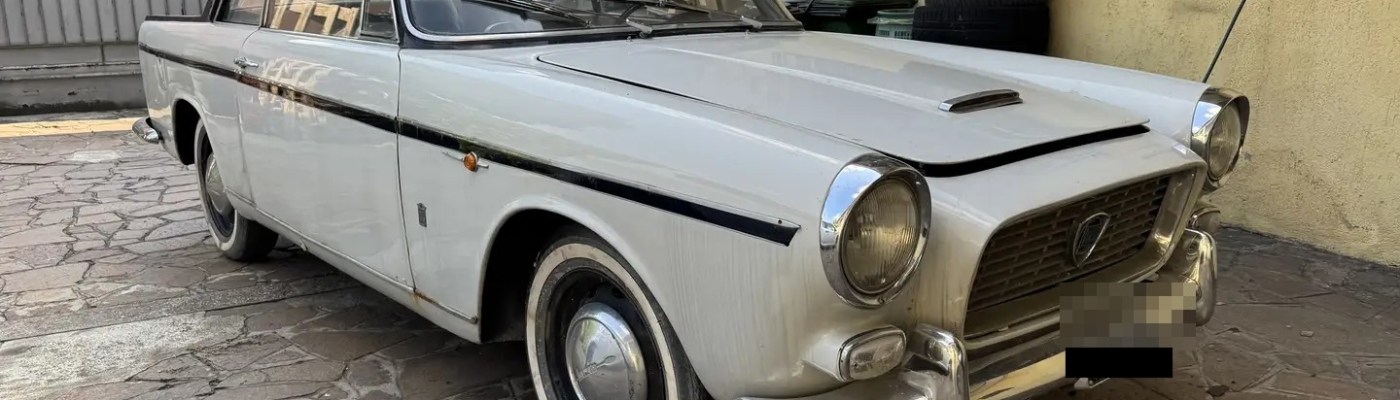
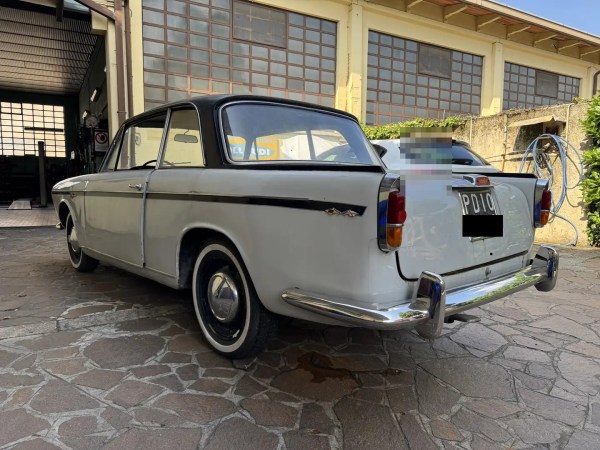
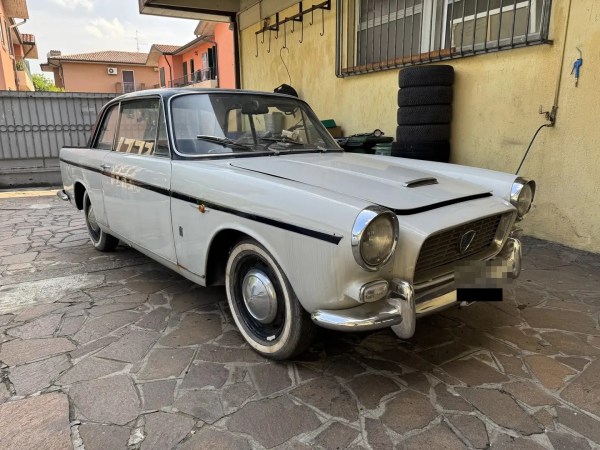
The Appia was Lancia’s smaller post-war car, but as often with Lancia the more interesting examples are not the standard saloons. The Vignale-bodied Appia Lusso sits in a different category: coachbuilt, more refined in detail, and far less common than the regular factory versions. A 1960 example with black Padova plates is therefore worth attention, especially when it still carries the visual identity of a period Italian car rather than that of a fully modernised restoration.
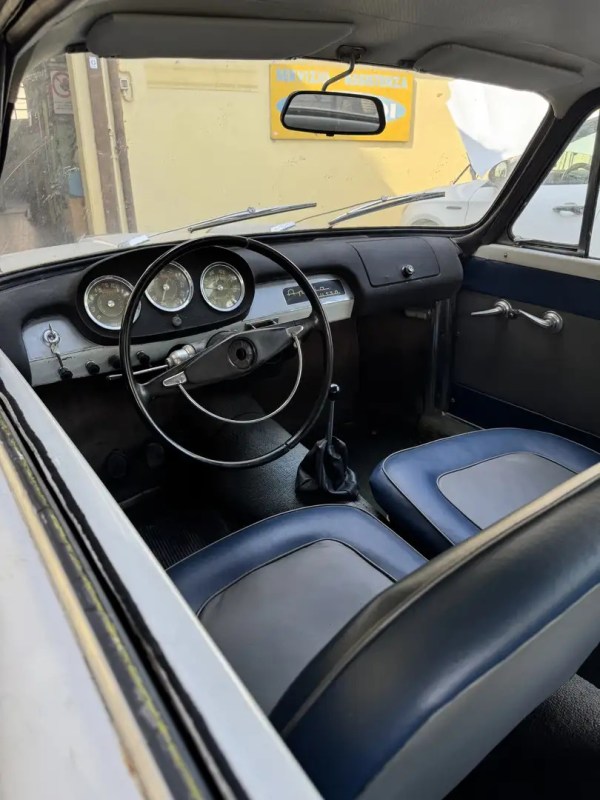
This car is presented as a rare Appia Lusso Vignale, mechanically in order but requiring restoration. The photos support that reading. The body appears complete, the trim is still present, and the two-tone exterior, side decoration, period plates, original-style hubcaps and blue-grey interior all give the car a coherent identity. It is not a polished example: the paint shows age, the panel edges and lower areas need close inspection, and the engine bay looks honest rather than detailed. The interior, however, still has the right basic atmosphere, with its original-style dashboard, seats and door cards appearing broadly intact.
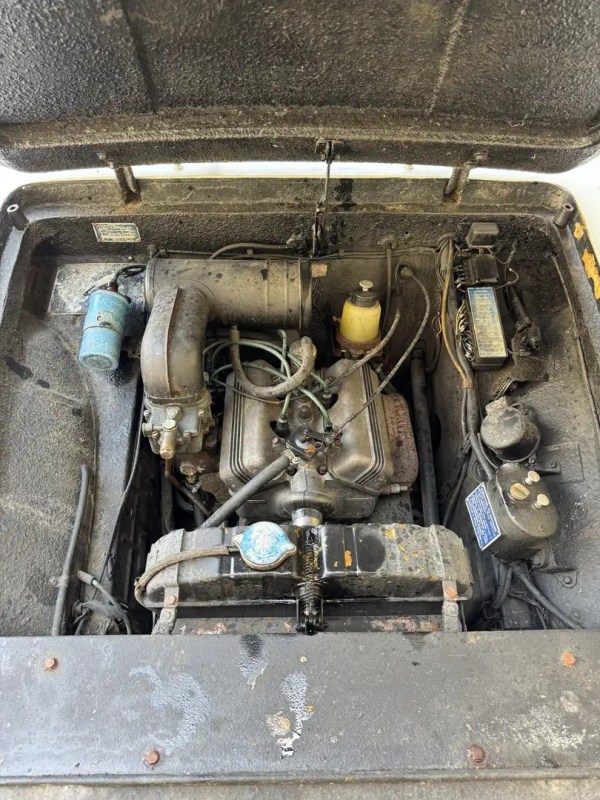
The appeal here is not that the car is ready to use as it stands, but that it seems to offer a complete and identifiable basis for restoration. On a coachbuilt Appia, that matters more than on a standard saloon, because missing trim, incorrect details or poor previous work can quickly make the project difficult and expensive. The main checks should be the body structure, lower panels, floor, sills, wheel arches, originality of the Vignale-specific parts, and the real state of the mechanicals behind the seller’s “in order” statement. If those points hold up, this is a more interesting project than its modest size suggests. Find it for sale at €15,000 (today $17,500) here in Flero, Italy. Thanks to Fluc for this tip!

