
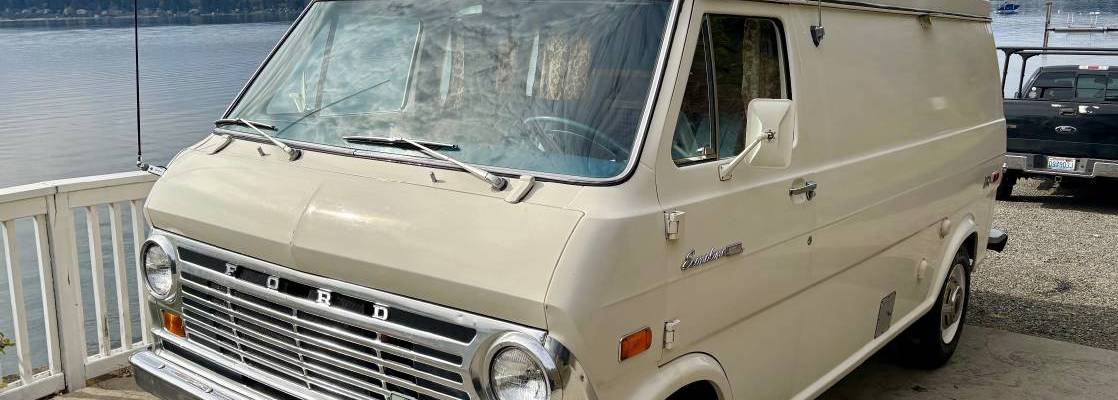
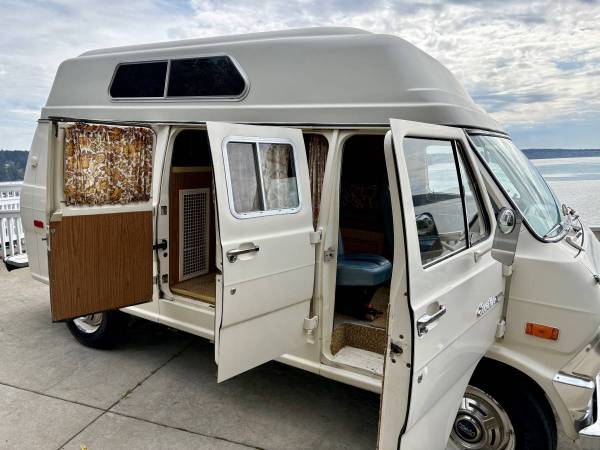
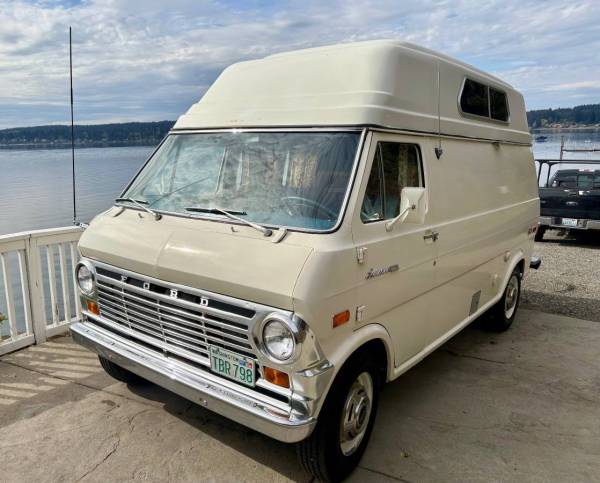
The 1970 Econoline sat at the more utilitarian end of Ford’s light-commercial range, but period camper conversions gave it a second life as a compact travel vehicle. What makes vans like this interesting today is not rarity in the usual collector-car sense, but survival: the appeal depends on how much of the original conversion, trim and documentation remain intact, and whether the vehicle still reads as a coherent period piece rather than a later rebuild. The E-300 could be had with different engines, but in this case the seller states that the van is equipped with a 302 cu in V8 and a 3-speed automatic, which is a plausible and period-correct configuration for a 1970 SuperVan camper.
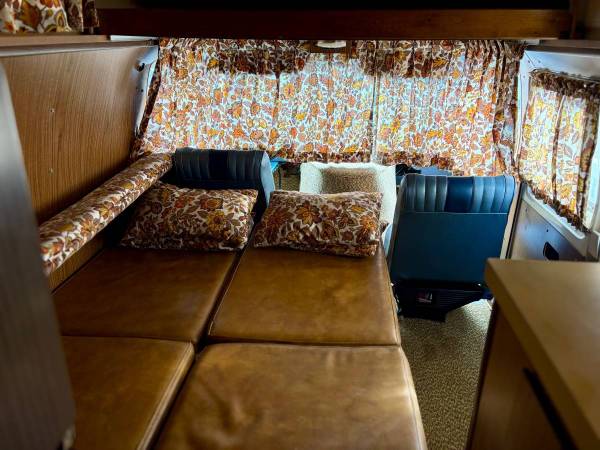
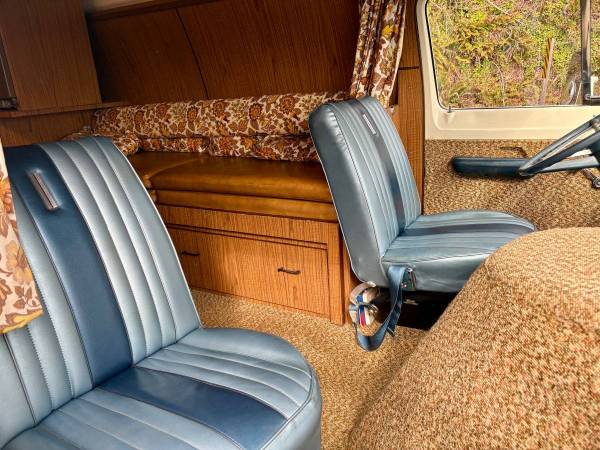
This example looks strong precisely because it has not been modernised out of its era. The Red-E-Kamp conversion, high-top roof, blue vinyl front seats, brown cushions, patterned curtains, wood-look cabinetry and period house equipment all appear broadly consistent with the seller’s description. The photos also support the claim that the van has been preserved unusually well for this type of vehicle: the dashboard presents cleanly, the camper furniture looks complete, and the paperwork shown in the ad adds weight to the story of long-term ownership and careful record-keeping rather than casual resale fluff. The declared 302 V8 matters here because it gives the van a more suitable drivetrain for camper use than the base six-cylinder setup, though that still does not prove the engine is the one originally installed at the factory.
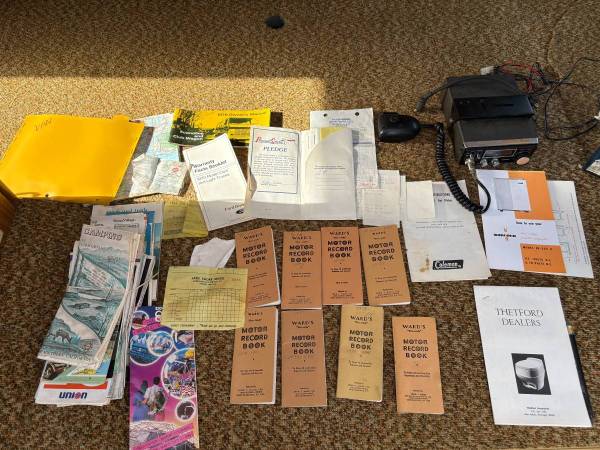
The real interest here is that it seems to be an intact survivor, not just an old van cleaned up for sale. The seller says it came from the original owner, had spent 39 years in dry storage, shows fewer than 43,000 miles, and retains service notebooks, manuals and original camper-related literature. That all matters more than the model name itself. Even so, this is still the kind of vehicle where the practical checks are obvious: confirm the mileage trail against the records, verify the claimed rust-free underbody, inspect the camper systems one by one, and establish whether the 302 V8 is simply period-correct or actually original to the van. If those points hold up, the value here is not speed or rarity, but the unusual completeness of a 1970 camper conversion that still looks convincingly of its period. Find it for sale at $24,999 here in Gig Harbor, WA, USA.

