

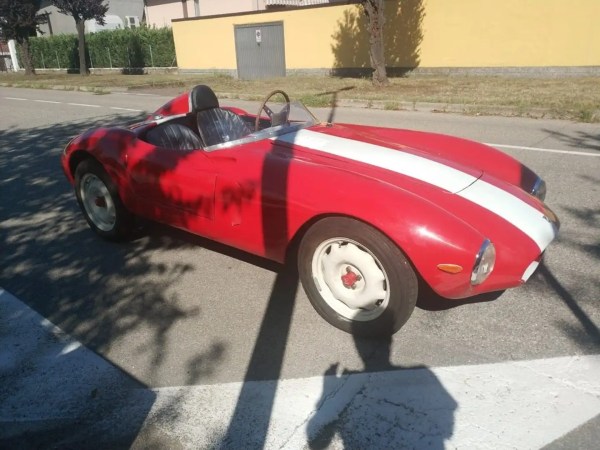
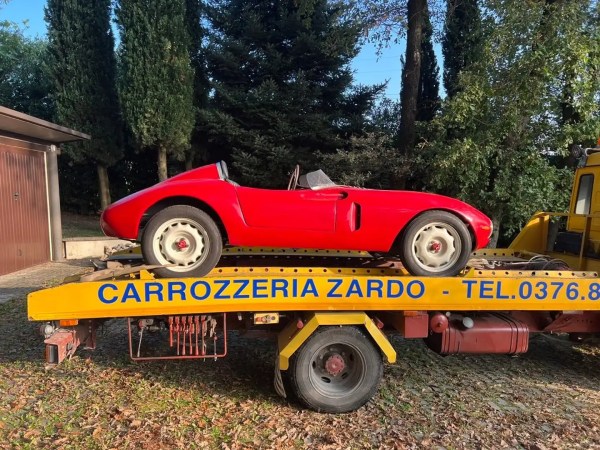
The car shown here is a Moretti 750 Sport Bialbero “Le Mans”, one of the most technically interesting small-displacement Italian sports cars of the 1950s and—according to official factory confirmation—one of just 20 examples built. It belongs to that narrow group of post-war machines where craftsmanship, engineering ambition, and competition intent are compressed into the smallest possible scale. Built in 1955 by Moretti, the 750 Sport represents the Turin firm at its most uncompromising. Giovanni Moretti had already established a reputation for extracting remarkable performance from modest mechanical bases, and this car is a clear expression of that philosophy.
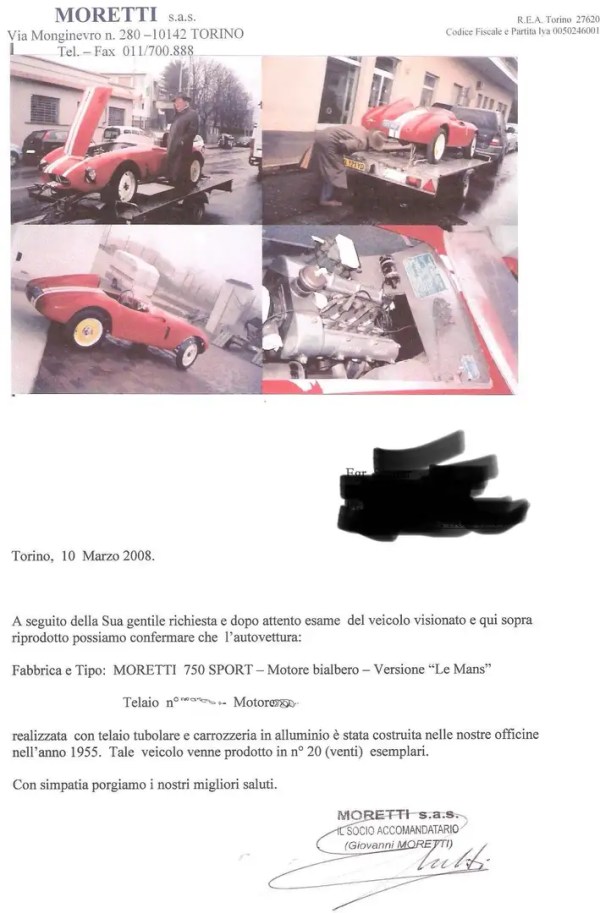
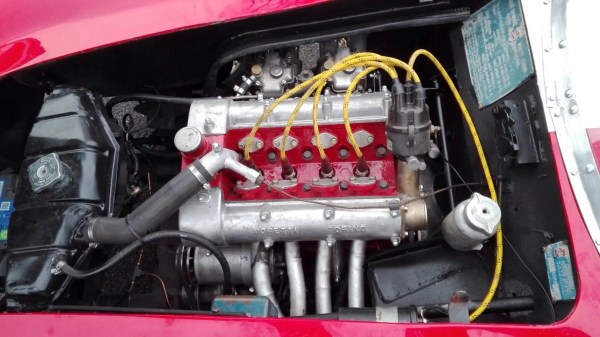
The engine is derived from the Fiat 750 four-cylinder, but describing it as a simple tuned Fiat unit would be misleading. While the crankcase and bottom end originate from Fiat, the most important component—the cylinder head—was entirely redesigned and manufactured by Moretti. The standard Fiat pushrod layout was abandoned in favor of a true twin overhead camshaft (bialbero) aluminum head, engineered in-house. This head featured hemispherical-style combustion chambers, inclined valves, and chain-driven camshafts, allowing significantly higher engine speeds and far superior breathing compared to the original Fiat design. In period, this approach mirrored what larger manufacturers like Alfa Romeo were doing at a different scale, but applied to a sub-750 cc engine. This engine was installed in a tubular steel chassis, another departure from conventional Fiat-based construction. The body, entirely hand-formed in aluminum, was produced in Moretti’s own workshops. Lightweight, minimal, and functional, it reflects a racing mindset rather than any concession to comfort. The compact barchetta profile, low windscreen, and short overhangs clearly align the car with contemporary competition machinery rather than road-going sports cars.
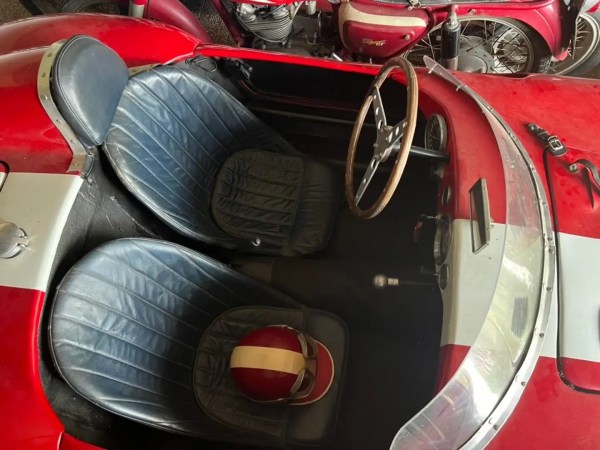
The “Le Mans” designation is historically consistent with Moretti’s active involvement in international endurance racing during the period. While not every example has a documented race history, the model itself was conceived for long-distance reliability combined with efficiency—key attributes in an era when outright power mattered less than balance, weight, and mechanical stamina. Inside, the cockpit remains intentionally sparse. Low-backed seats, a small-diameter steering wheel, essential gauges, and minimal trim reinforce the car’s purpose. Find it for sale at €190,000 (today $221,000) here in Lonato del Garda, Italy. Thanks to Fluc for this tip!
 Classic Virus