

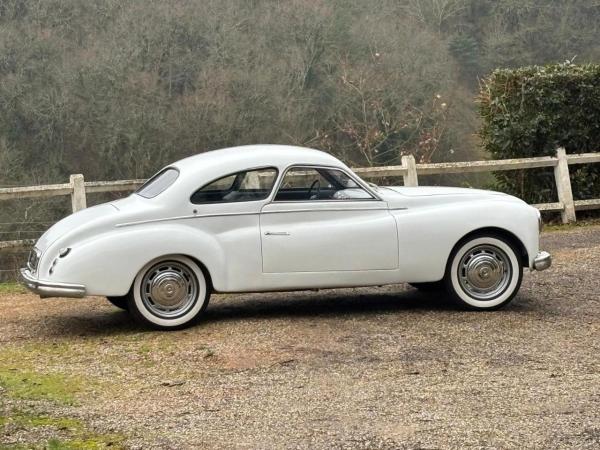
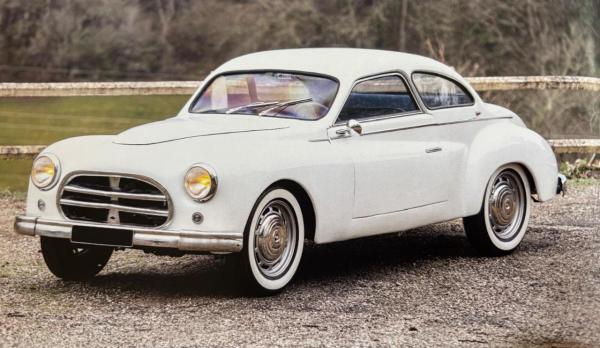
The Peugeot 203 was introduced in 1948 as the first post-war model produced by Peugeot. It featured a 1290 cc inline-four engine and a monocoque body, and remained in production until 1960. The model served as a platform for several independent engineering and coachbuilding projects during the 1950s.
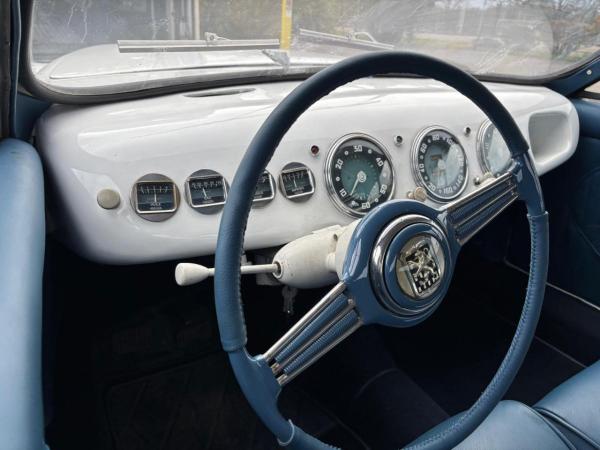
Eugène Martin, active as a racing driver and engineer, participated three times in the 24 Hours of Le Mans. Following his racing career, Martin focused on automotive engineering and vehicle preparation. In the early 1950s, he initiated the development of a sports coupe based on the Peugeot 203 mechanical platform, with the objective of producing a limited series of performance vehicles. Martin developed four prototypes designated as Martin Spéciale, which were entered in various competitions. The prototypes were based on modified Peugeot 203 chassis and equipped with upgraded mechanical components. Martin subsequently offered the design to Samson, which resulted in the creation of the Samson 2300 S project.
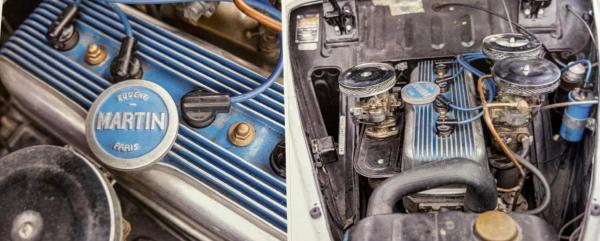
The vehicle described in this document is the only surviving prototype based on the Peugeot 203 platform. It is equipped with a 1500 cc engine incorporating multiple modifications, including Borgo pistons, twin Eugène Martin carburetors (even though we see three of them inside the engine bay), a 4×1 exhaust system, a large-capacity oil sump, a special aluminum rocker cover, and a rev counter. No additional prototypes based on the 203 chassis are known to have survived. Find it for sale at €75,000 (today $85,500) here in Foulayronnes, France. Thanks to Fluc for this tip!
 Classic Virus